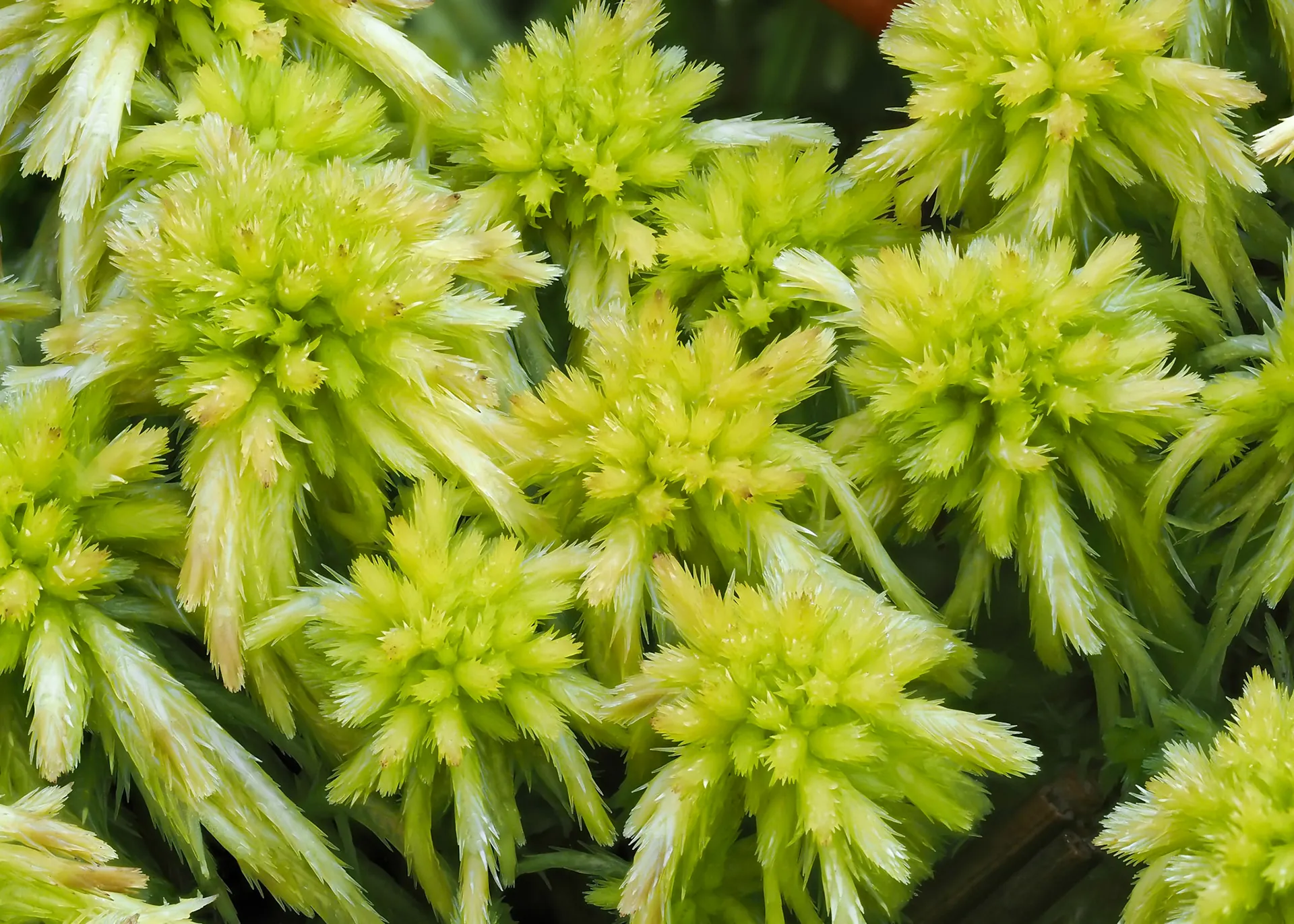
Sphagnum falcatum
About · History

History

History of the International Association of Bryologists: the first twenty-five years

by Robbert Gradstein · Muséum National d’Histoire Naturelle, Paris

57

Years covered

32

Congresses

11

Presidencies

Origins

An idea, a committee, a society

In 1966, at the Pacific Science Congress in Tokyo, some fifteen bryologists met informally. They agreed that the field had grown large and dispersed enough to need an international association of its own. An organising committee was formed, chaired by William C. Steere (USA), with Stanley W. Greene (UK) and Zennoske Iwatsuki (Japan) as vice-chairmen.

After three years of preparatory work, the proposal to establish the International Association of Bryologists was carried unanimously at the 11th International Botanical Congress in Seattle, in August 1969. The new society was placed under the wing of the IAPT, using the journal TAXON for its newsletter, the Bulletin of Bryology, with Rob Gradstein as its first secretary.
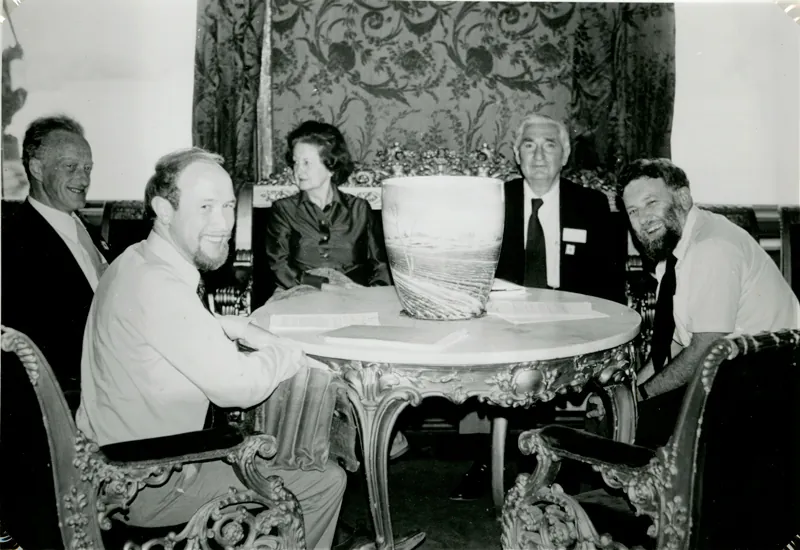
IAB executive committee meeting, St. Petersburg, 1975. From left: Peter Florschütz (vice-president), Robbert Gradstein (secretary-treasurer), Dorothy Steere, Bill Steere (president), Stanley Greene (vice-president). (Photograph taken by Zennoske Iwatsuki)

The first executive committee brought together William C. Steere as president, Stanley Greene and Zennoske Iwatsuki as vice-presidents, and Rob Gradstein as secretary. In 1975, at the congress in St. Petersburg, Lewis E. Anderson took over as president. Membership grew steadily, from an initial hundred to some six hundred by the mid-1980s.

With the move of the IAB office to Edmonton in 1987, under the new secretary-treasurer Dale H. Vitt, the association became independent in all but name: a separate budget and an endowment fund were established. The combined IAPT/IAB membership was finally abandoned at the Beijing meeting in 1997, and the society’s independent status was written into its constitution.

“It was felt that the society should stand on its own feet.”

Meetings

Congresses and symposia

During its first twenty-five years the IAB organised thirteen international congresses and symposia, usually at two-year intervals. They alternated between broad general meetings and gatherings on special themes, and each was accompanied by a field trip. The largest was the World Conference of Bryology in Tokyo, 1983, attended by more than 150 bryologists.

  • 1973 — Boulder, USA
  • 1975 — St. Petersburg
  • 1979 — Geneva
  • 1980 — Vancouver
  • 1981 — Sydney
  • 1983 — Tokyo
  • 1985 — Vácrátót, Hungary
  • 1987 — Berlin / Mainz
  • 1989 — St. Louis
  • 1989 — Mont Rigi, Belgium
  • 1991 — Exeter, UK
  • 1993 — Yokohama
  • 1995 — Mexico City

Committees

Several committees were set up to promote international cooperation. The Glossary Committee (1979–1990) produced the multilingual Glossarium Polyglottum Bryologiae. Others followed: a Constitution Committee, a Publication Policy Committee, and a Medal Committee that grew into the Awards Committees. Standing committees for Tropical Bryology (1983) and Bryologia Africana (1983) supported research in the tropics, and the Committee for Endangered Bryophytes (1990) is today the IUCN/SSC Bryophyte Specialist Group.

Projects and publications

The association’s early publishing was prolific: the Bulletin of Bryology (1971–1989), The Bryological Times (since 1981), the review series Advances in Bryology (1981–1997), the Compendium of Bryology, the Glossarium Polyglottum Bryologiae, the Conspectus of Bryological Taxonomic Literature, and the ongoing Index Hepaticarum. In 1991 the BRYONET email discussion group was created, becoming an official IAB activity in 2001.

Awards

From 1979 the IAB began honouring outstanding contributions to bryology. Its awards include the Hedwig Medal (lifetime achievement), the Richard Spruce Award (early career), the Hattori Prize (best publication) and the Riclef Grolle Award (bryodiversity), alongside the Stanley Greene Award and a conservation grant.
Governance

IAB Councils

The presidents who have led the association through its first decades:

1969–1975William Campbell Steere
1975–1981Lewis Edward Anderson
1981–1987Hiroshi Inoue
1987–1993Stanley W. Greene
1993–1999Timo Juhani Koponen
1999–2005Stephan Robbert Gradstein
2005–2009Janice Glime
2009–2013Jeffrey G. Duckett
2013–2015Dietmar Quandt
2015–2023Bernard Goffinet

by Robbert Gradstein. With thanks to Janice Glime and Françoise Bouazzat.