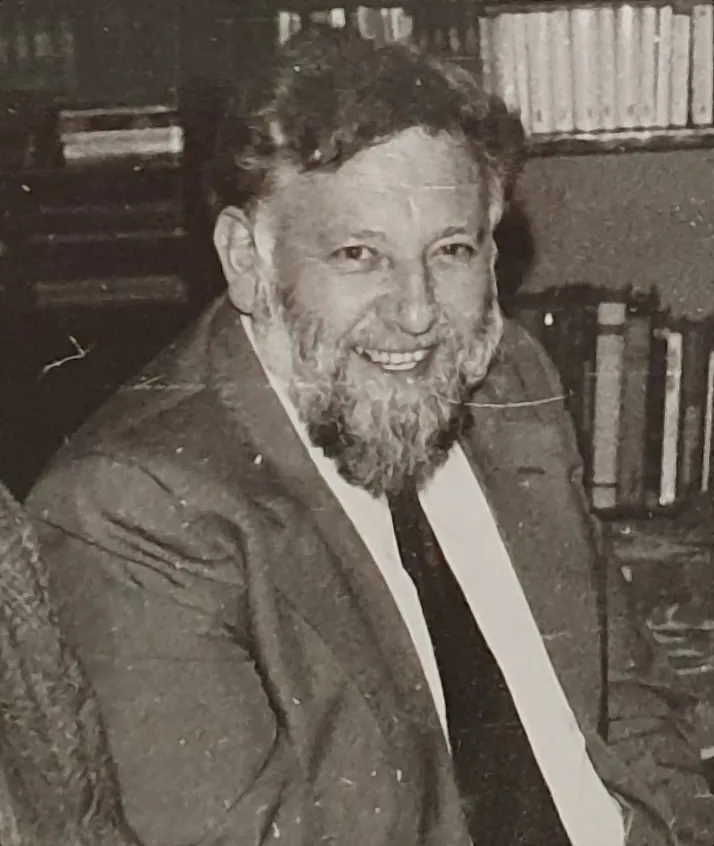
Qtanley Greene was born on 19 July 1928 in County Cork, Ireland. Raised as the son of a country landowner, he retained throughout his life a strong sense of independence and leadership. He studied at Trinity College, Dublin, before taking up his first post as demonstrator in Botany at the University College of North Wales, Bangor, from 1951 to 1955. There he worked under Professor P. W. Richards on the taxonomy of Plagiothecium, producing an important revision of the British species in the P. denticulatum–P. sylvaticum group.
In 1955, at the invitation of Professor E. J. Maskell, Stanley moved to the University of Birmingham, where he remained until 1969, first as lecturer and later as senior lecturer. He was awarded a Birmingham Ph.D. in 1964. His teaching was remembered for the same infectious enthusiasm that characterized his whole approach to botany.
At Birmingham, his research initially focused on the taxonomy and reproductive biology of British bryophytes, but his interests soon turned increasingly towards the botany of Antarctic regions. In 1960–1961, at the invitation of the Falkland Islands Dependencies Survey, later the British Antarctic Survey, he carried out a major floristic and vegetation survey on the sub-Antarctic island of South Georgia. During a sabbatical leave in 1964–1965, based at the New York Botanical Garden, he also visited Alaska and the McMurdo Sound region of continental Antarctica with Professor W. C. Steere.
From 1963 to 1973, Stanley initiated and directed the botanical programme within the British Antarctic Survey, first on an honorary basis and, from 1969, as full-time head of the Botanical Section. His review articles helped define the development of Antarctic botany in the 1960s and 1970s, and he made important contributions to the vascular flora of South Georgia and other sub-Antarctic islands. He also encouraged studies on the ecology of Antarctic cryptogams and the functioning of polar ecosystems, which were actively pursued by colleagues in the Botanical Section. In 1970, together with his wife Dorothy and other collaborators, he published the first volume of a projected Antarctic Moss Flora.
In 1974 Stanley left the British Antarctic Survey and moved to Penicuik, near Edinburgh. The following year he became head of the Plant Biology subdivision at the Institute of Terrestrial Ecology. The BAS Herbarium and a team of five bryologists moved with him, allowing him to continue supervising research on the taxonomy and ecology of Antarctic bryophytes. In 1981, as taxonomic work within the Institute was reduced, he accepted an appointment as Natural Environment Research Council Reader in Botany at the University of Reading, a position he held until his retirement in 1987.
Stanley joined the British Bryological Society in 1951. He served several terms on Council and was President in 1980–1981. The Society always remained very close to his heart.
He was also a major figure in the development of bryology internationally. Following discussions at the Pacific Science Congress in Tokyo in 1966, he became one of the small group who launched the International Association of Bryologists in 1969. He served on its first Executive Committee and remained on Council until his election as the fourth President of the IAB in 1987, the same year in which he completed his term as President of the International Association for Plant Taxonomy.
Within the IAB, Stanley was the initiator and driving force behind several important undertakings, including the review journal Advances in Bryology, the major taxonomic workshop held in Geneva in 1979, and Bryological Times, the newsletter he edited with great care until its fiftieth issue, which appeared only a few weeks after his death. The Conspectus of Bryological Taxonomic Literature was also prepared under the aegis of the IAB and relied largely on contributions from bryologists throughout the world.
After his retirement, Stanley remained in Reading to complete work on the Conspectus, before moving to Holland in January 1989. He died a few months later.
Reference: Longton (1990) Journal of Bryology 137-148
Image: © From S. R. Gradstein’s personal collection.