Zennoske Iwatsuki was born on 10 August 1929 in Okazaki City, Aichi Prefecture, Japan. He became one of the most influential Japanese bryologists of the twentieth century, and made major contributions to the study of the moss flora of Japan and Asia.
Iwatsuki studied at Okazaki Higher Normal School of Nagoya University, where he graduated in 1951.During his time at Nagoya University, Iwatsuki studied with Professor Norio Takaki, to whom the genus Takakia was later dedicated. (This remarkable bryophyte had first been recorded by William Mitten in 1861 as a new liverwort species, Lepidozia ceratophylla, before Hattori and Inoue later established the genus Takakia). Under Takaki’s influence, Iwatsuki developed a strong interest in bryophytes, which became the central focus of his scientific life. After graduation, he worked for a few years as a public school teacher, before joining the research staff of the Hattori Botanical Laboratory on 1 September 1954, with the support of Dr. Takaki.
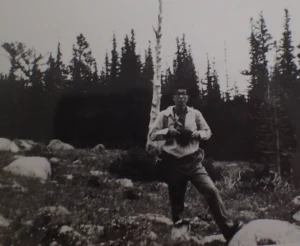
The Hattori Botanical Laboratory became the first major centre of Iwatsuki’s bryological career. He remained associated with the laboratory for about a quarter of a century and developed there a fruitful and productive research programme. Between 1955 and 1957, he studied at the University of Tennessee as a foreign graduate student and obtained a master’s degree in Botany. His adviser, Aaron J. Sharp, had a lasting influence on his subsequent work. During and after this period, Iwatsuki and Sharp carried out fieldwork in several regions, including the Southern Appalachian Highlands, Florida, Mexico, Yakushima Island, Hong Kong, the Himalaya, the Philippines and Alaska. Sharp later described him as a brilliant scholar and a wonderful companion, and emphasized both his broad knowledge of mosses and his enthusiasm as a collector.
In 1961, Iwatsuki received his Doctor of Science degree from Tokyo University of Literature and Science for his studies on epiphytic bryophyte communities in Japan. His research interests were broad, but his major contributions concerned the taxonomy, floristics and ecology of mosses. He published important monographs on the genus Fissidens, with detailed descriptions, identification keys and clear line drawings, which became valuable models for bryophyte taxonomic work. His studies also contributed to resolving complex taxonomic problems and to describing new moss species.
Iwatsuki’s work extended to the entire moss flora of Japan. Among his most important achievements were the Catalog of the Mosses of Japan published in 1991, the New Catalog of the Mosses of Japan published in 2004, his contributions to the Illustrated Moss Flora of Japan, and the volume Mosses and Liverworts of Japan edited with H. Deguchi and T. Furuki in 2001. Over the course of his career, he published more than 300 articles on Japanese and Asian mosses. These works remain essential references for the study of the bryophyte flora of Japan.
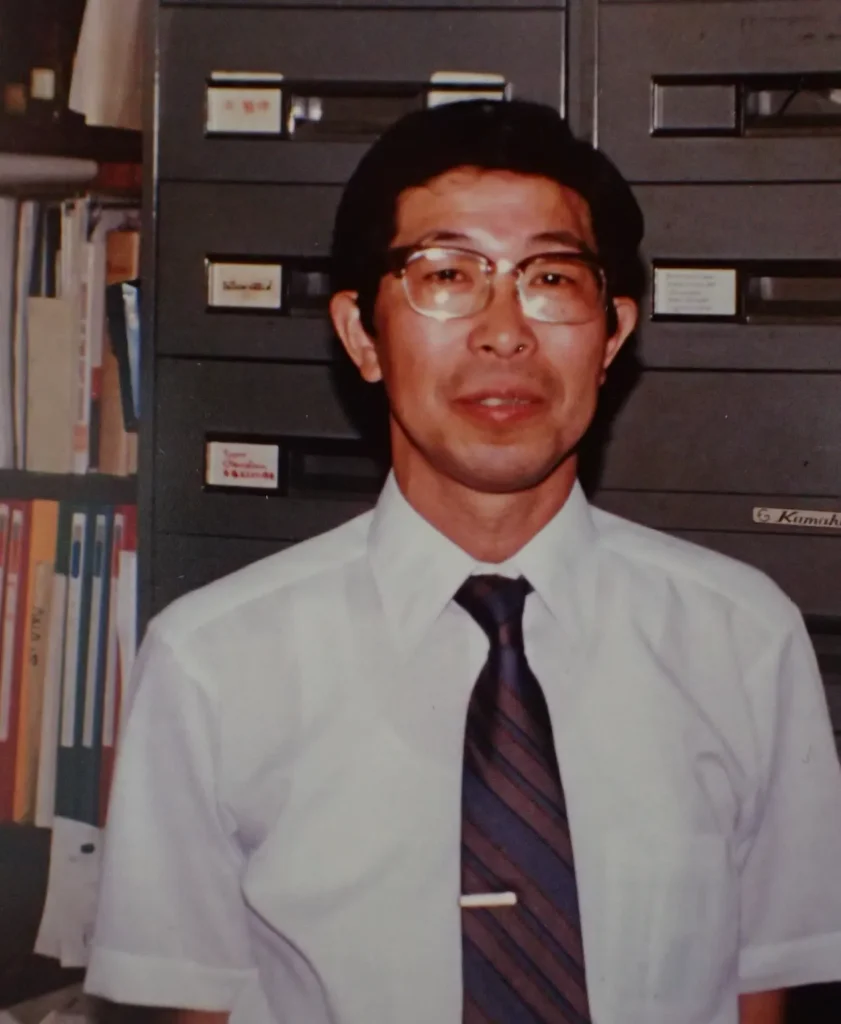
In 1984, Iwatsuki moved to Hiroshima University, where he joined the Laboratory of Plant Taxonomy of Professor H. Ando as Associate Professor. He was later appointed Professor after Ando’s retirement in 1985. At Hiroshima, he devoted much of his time to teaching, administration and the supervision of students, while continuing his own bryological research. He taught bryology, lichenology, algology and plant ecology, and guided eight doctoral students who later obtained permanent positions in academic institutions. His students remembered him not only as a scientist, but also as a generous mentor who taught them the essential attitude and discipline required to become researchers.
Iwatsuki maintained close contact with bryologists from many countries. Foreign colleagues visited his laboratory at Hiroshima University as well as the Hattori Laboratory in Nichinan, and he was remembered for his warm hospitality. Academic exchanges were often accompanied by informal discussions and by gatherings at his home, where his wife Chizuko welcomed guests and prepared meals. Although he had many administrative and teaching duties, Iwatsuki continued to observe bryophytes and write papers at home or during holidays, describing himself modestly as a “Sunday botanist”.
After his retirement from Hiroshima University in 1993, he returned to his hometown and established the Okazaki Branch of the Hattori Botanical Laboratory in his home, becoming its director. This allowed him to devote himself fully once again to bryological studies. In this personal and carefully organized workspace, with his desk, microscope, extensive literature collection and numerous specimens, he continued his research and published around 60 additional papers with colleagues.
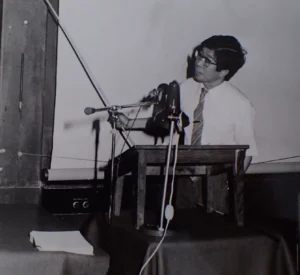
Iwatsuki also played an important role in bryological societies and editorial work. He served as Vice-President of the International Association of Bryologists from 1969 to 1975 and again from 1999 to 2005. He was President of the Bryological Society of Japan in 1992–1993, President of the Chugoku and Shikoku Branch of the Botanical Society of Japan in 1993 and 1994, and President of the Hikobia Botanical Society from 1996 to 1999. He was an honorary member of the Bryological Society of Japan and of the British Bryological Society. He also served the Journal of the Hattori Botanical Laboratory, first as Assistant Editor for volumes 41–73 and later as Editor for volumes 74–100.
His contributions to bryology were recognized by the naming of the genus Iwatsukia N. Kitag. and Iwatsukiella W.R. Buck & H.A. Crum in his honour. These names reflect the deep respect of the bryological community for his long and influential career.
Zennoske Iwatsuki died peacefully in Okazaki on 15 September 2015, at the age of 86. He was survived by his daughter Yasuko Matsubara and his son Yojiro Iwatsuki. His wife Chizuko, who had been a warm presence in his professional and personal life, had died earlier the same year. Iwatsuki is remembered as a dedicated bryologist, teacher, editor, mentor and colleague, and as one of the key figures in the development of modern bryology in Japan.