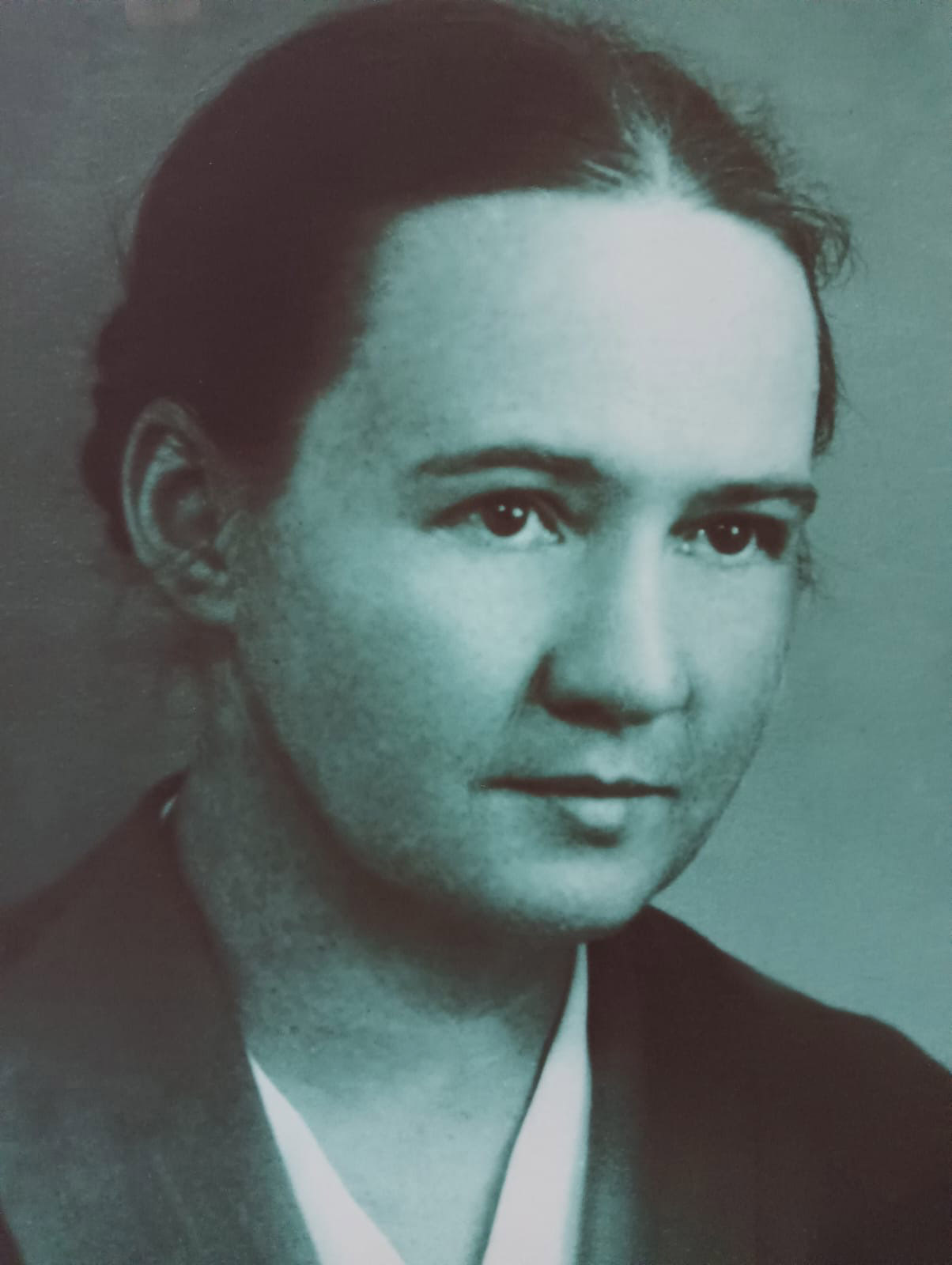
Anastasija Lavrentievna Abramova was a famous Russian and Soviet bryologist. All her scientific activities were connected with the Komarov Botanical Institute, Leningrad / St.-Petersburg, with works on the flora, taxonomy, and geography of bryophytes.
A.L. Abramova was born in St.-Petersburg, on October 26, 1915, into a worker’s family. From 1933 she had to work as a draftswoman at a factory, but in parallel to that job she received her education at the workers’ faculty of Leningrad State University (now the Saint-Petersburg State University). In 1934 at the same university, she entered the biological faculty. She chose the Department of Higher Plant Morphology and Systematics; Dr. N.A. Bush, the highly esteemed professor, became her first mentor in botany.¹ A.L.’s first paper that was published in 1938 involved the study of Festuca varia (Poaceae). However, from 1937 her research interest shifted in favor of bryology. She graduated from Leningrad State University with an honours degree and later became a postgraduate student.
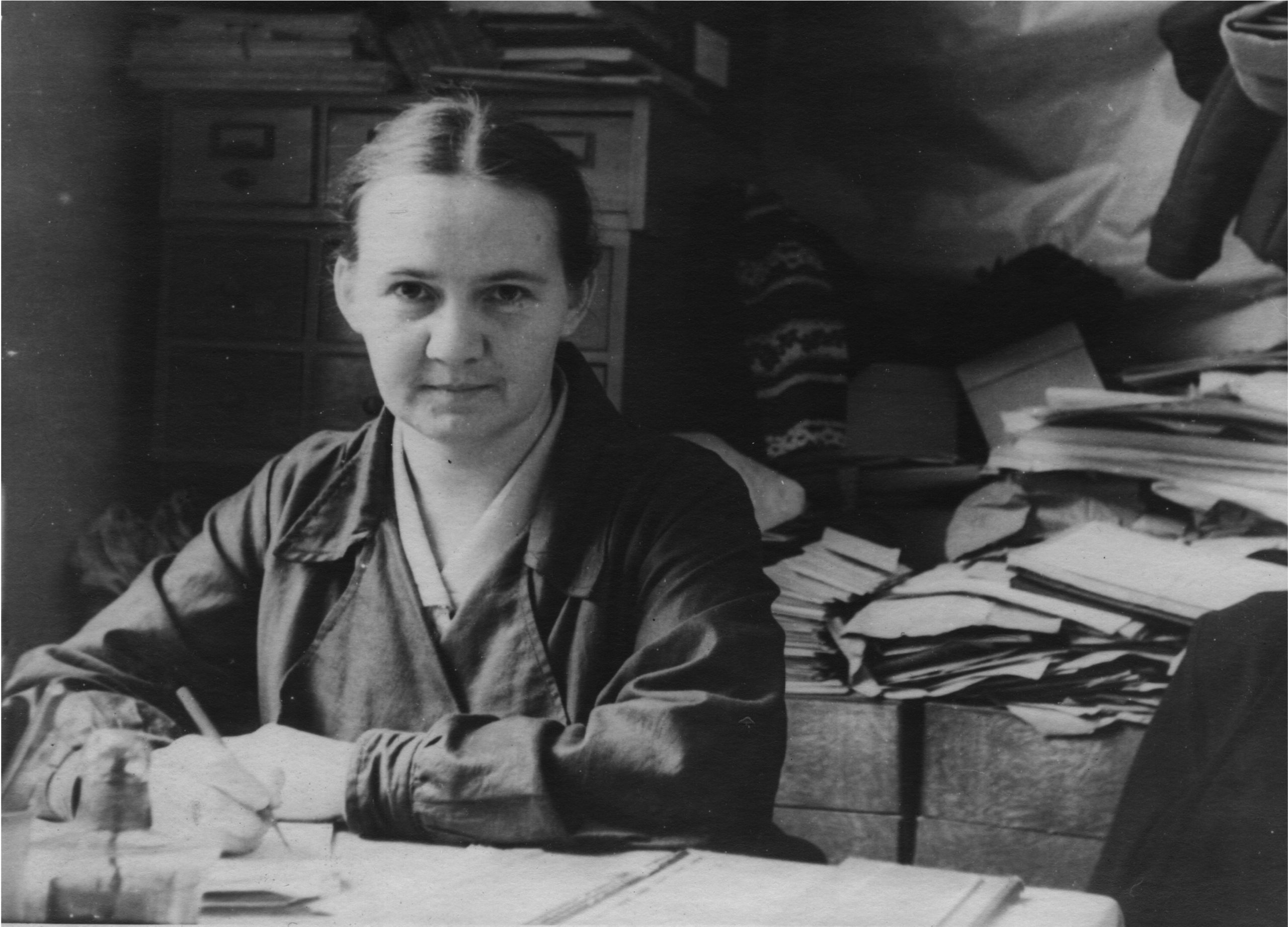
During her postgraduate studies, A.L. married fellow student Ivan Ivanovich Abramov. Their family alliance was a very successful one for their future professional growth, as from then on, all major research was performed by them as a team. During the Great Patriotic War A.L., along with her daughter, were evacuated to Chrepovets, and then to Bashkiria. After the war A.L. was able to move back to Leningrad to continue her postgraduate research, and in 1947 she defended her dissertation – on the monographic studies of the moss families Meesiaceae and Catoscopiaceae of the USSR. The work was supervised by the University Professor A. A. Korchagin, with advisory assistance from Professor L.I. Savich-Lyubitskaya, the leading expert in bryology from the Botanical Institute. In 1946, A.L. Abramova became a staff member of the Department of Cryptogams at the Botanical Institute where she worked until she officially retired in1979. ¹’²
In the 1950s, A.L. actively participated in the project “Flora Plantarum cryptogamarum URSS”. Treatments of the orders Schistostegales and Tetraphidales were published by her in the 2nd volume of the “Flora” in 1954; she also prepared original drawings for the Polytrichales for the 3rd volume.
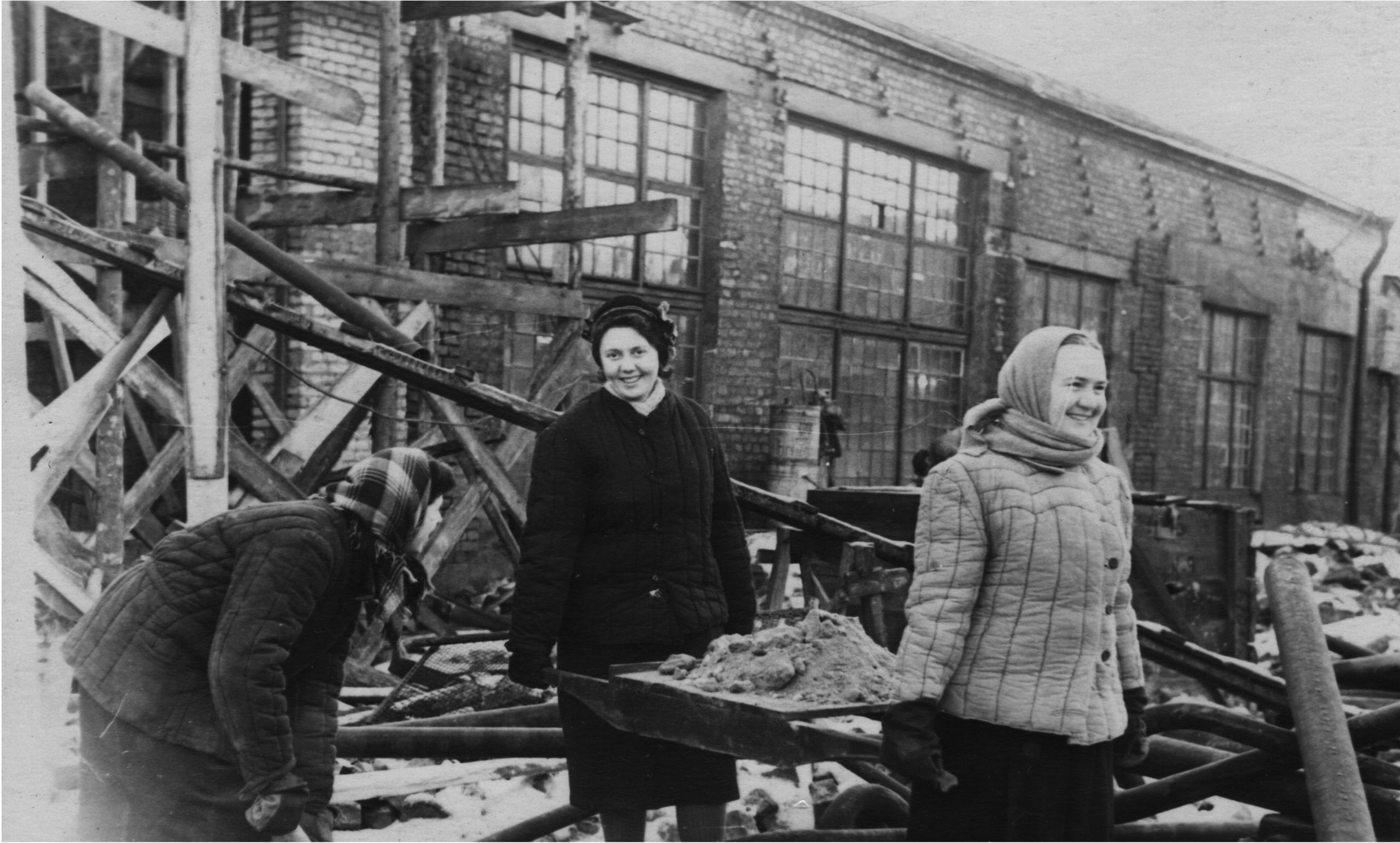
Regional floristic research had always been an essential part of the Abramovs’ activity. Their publications on bryophyte floras of the Caucasus, Russian Arctic, and Mongolian People’s Republic summarized their scrupulous treatments of extensive collections from these regions. The Abramovs also clarified the problem of high endemism of the bryophyte flora of the Russian Far East, based on a detailed revision of herbarium materials. Also, together with I.I. Abramov, A.L. contributed to the study of fossil mosses.
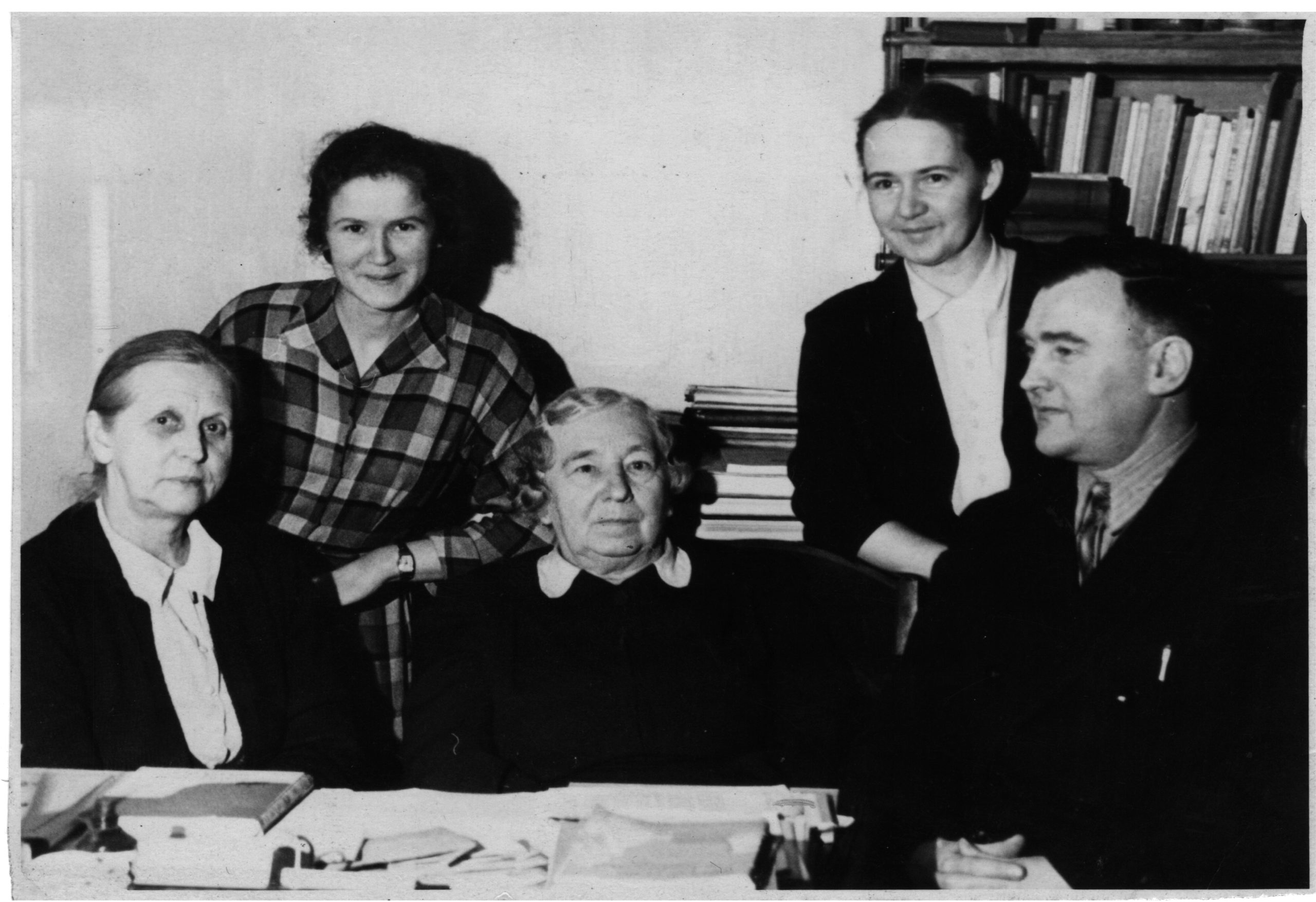
The Abramovs’ rich experience and comprehensive knowledge in the field of bryology were shared with the wide Soviet audience in popular science multi-volume editions such as “The Plant Life”, published in the 1970s, where all the latest achievements of bryology at that time had been considered.² Bryology colleagues from all around the former USSR came to the Komarov Botanical Institute for consultations with the Abramovs.
A.L. Abramova was a talented and prolific bryophyte illustrator, which was another brilliant aspect of her professional life. Her papers on moss taxonomy (e.g., on genera Leptopterigynandrum, Helodium, Heterocladium, Neckeradelphus, etc.), as well as her monographs and handbooks were always supplemented with meticulous drawings. A fundamental, richly illustrated work such as the “Handbook of the mosses of the Arctic of the USSR” (Abramova, Savich-Lyubitskaya, Smirnova 1961) still serve as a valuable reference book for bryologists today.
A.L. spent much of her time working on herbarium collections of the Komarov Botanical Institute. She participated in the publication of several issues of “Hepaticae et Musci URSS exsiccati” and in specimen exchange with leading world herbaria.
A.L.’s contribution to moss taxonomy was highly appreciated by foreign bryologists, and she was elected to serve on the Committee for moss taxonomy at the XII International Botanical Congress (1975) in Leningrad, USSR (now St.-Petersburg, Russia). ²
After retirement A.L. kept working actively on her research. After I.I. Abramov’s death in 1990, she decided to focus on his unfinished manuscript on the mosses of Karelia, which had been started by him in cooperation with L.A. Volkova. A.L. felt it her duty to accomplish this goal and publish this book, having provided it with her original illustrations, and by revising and editing its final version – “Handbook of the mosses of Karelia” (1998).

Throughout all her life A.L. Abramova was an example of self-sacrificing service to science and in particular to bryology. Two moss species, Entosthodon abramovae Fedosov & Ignatova (2010) (Funariaceae)³ and Didymodon abramovae Ignatova & Fedosov (2024) (Pottiaceae)? were named in honor of Anastasija Lavrentievna Abramova.
References
¹ ??????? ?.?. & ?.?. ???????? [Afonina, O.M. & L.I. Abramova]. 2005. ????????? ???????????????????? (? 90-????? ?? ??? ????????) [Anastasija Lavrentievna Abramova (on 90th birthday)]. ???. ????. 90 (12): 1929-1939.
² Anonymous. 2012. In memory of Anastasija Lavrentievna Abramova (1915-2012). Obituary. Arctoa 21: 273-274.
³ Fedosov V.E., E.A. Ignatova, M.S. Ignatov & G.Ya. Doroshina. 2010. On the genus Entosthodon (Funariaceae, Musci) in the Caucasus. Arctoa 19: 75-86.
? Ignatova E.A., V.E. Fedosov, O.I. Kuznetsova, A.V. Fedorova & M.S. Ignatov. 2024. On the genus Didymodon s. str. (Pottiaceae, Bryophyta) in Russia. Arctoa 33: 129-155.
Y.I. Kosovich-Anderson
My gratitude goes to O.M. Afonina for sharing the photograph of A.L. Abramova.