IAB
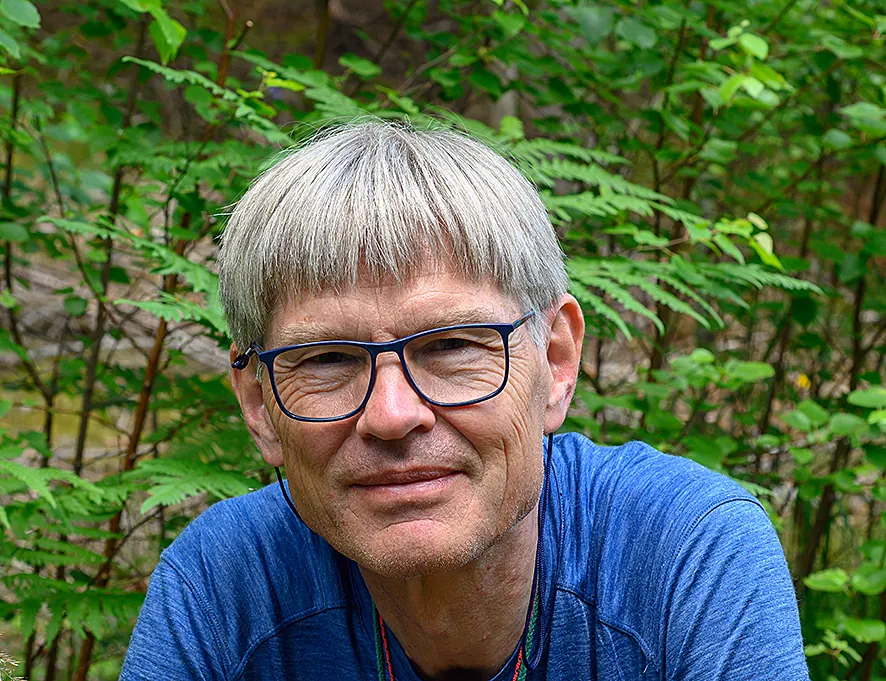
As a youngster, Lars had a general interest in nature. He had bird, flower, and insect periods, and finally got stuck with bryophytes. In the beginning as an amateur, but gradually transferring into the academic world, intermixed with periods as high school teacher and home care assistant. Lars academic career was not straight-forward, starting in Gothenburg, then in Lund, and finally in Stockholm. He started his research on bryophytes in the mid-1980ies inspired by Elsa Nyholm and Thor-Björn Engelmark at the Swedish Museum of Natural History, where he also had his formal PhD supervisor, the mycologist prof. Nils Lundqvist. He earned his PhD at the University of Stockholm in 1994 with the thesis ‘Taxonomic studies on pleurocarpous mosses, with special reference to the Calliergon-Scorpidium-Drepanocladus complex in northern Europe’. In 1998 he became Docent (approx. associate professor) at the same university. He was employed as junior researcher at the Swedish Museum of Natural History from 1993 to 1998, financed by the Swedish Research Council, and after that got a position as senior curator at the same museum, where he was employed from 1998 to January 2025.
Throughout his research career Lars has had a strong interest in pleurocarpous mosses in general, with a particular focus on members of the Amblystegiaceae, Calliergonaceae, and Scorpidiaceae. Many bryologists have probably cursed the name changes he was responsible for in these families. During his last c. 20 years at the museum, he had a great interest in the genetic variation within and between moss species, as well as phylogeography. Other lines of his research included reproductive biology (with Irene Bisang) and palaeoecological implications of fossil bryophytes. He has authored or co-authored more than 280 scientific and more than 80 popular papers. Lars contributed to flora works in Sweden, Madeira, North and South America, Australia, and Russia. He had several editorial tasks, including for Bryological Times with Lars Söderström between 1993-1995, as well as associate editor for Journal of Bryology between 1994-2011 and for Botanical Journal of the Linnean Society between 2012-2026.
A few research highlights: Lars and co-workers provided several examples of how frequent and important cryptic species are among bryophytes (e.g., Hedenäs, DOI: 10.1080/03736687.2020.1722923; DOI 10.25227/linbg.025731; Hedenäs et al., DOI: 10.1093/botlinnean/boac011/6550633). He was involved in describing the newly discovered island Tuppiap Qeqertaa outside Greenland, where three moss species were the only land plants found (Bennike et al., DOI: 10.1017/S003224740600550X). Per chance, he and co-workers found evidence of horizontal gene transfer (HGT) between plastids in two mosses, the first clear evidence of HGT in green land plants (Hedenäs et al., DOI: 10.1093/aob/mcab021).