
IAB
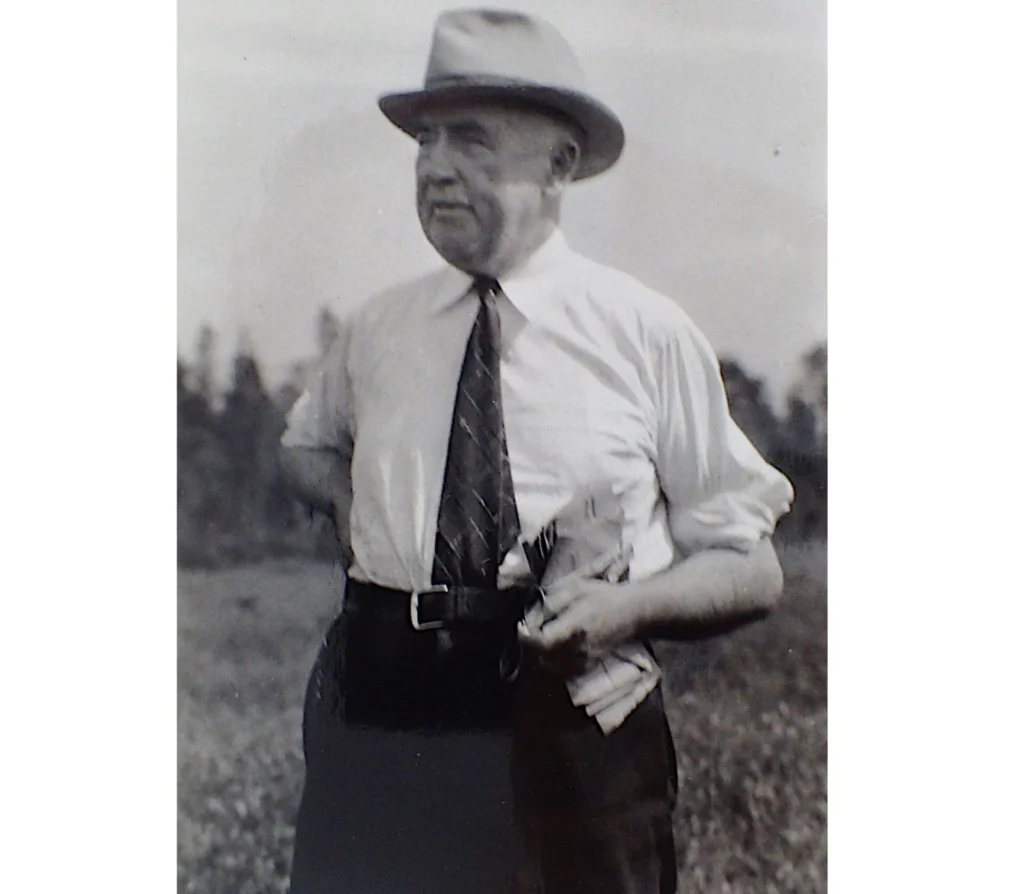
Alexander William Evans was an American botanist whose research focused primarily on liverworts and, later in his career, lichens. He was born on 17 May 1868 in Buffalo, New York, and studied at Yale University, graduating from the Sheffield Scientific School in 1890. He received an M.D. from the Yale Medical School in 1892 and completed a hospital internship, but his growing interest in botany, encouraged in particular by Yale botanist Daniel Cady Eaton, led him away from medicine and toward botanical research.
After further botanical study in Berlin under Leopold Kny, Evans returned to Yale in 1895, where he succeeded Eaton in teaching botany. He served successively as Instructor, Assistant Professor and, from 1906 to 1936, as Daniel Cady Eaton Professor of Botany. After his retirement, he remained associated with Yale as Professor Emeritus until his death in 1959. Schuster’s account emphasizes that Evans spent virtually his entire scientific career at Yale and that his influence extended over several generations of bryologists.
Evans became particularly well known for his studies of the Hepaticae. His publications covered the liverwort floras of North America, Puerto Rico, Hawaii and other regions, as well as detailed systematic studies of genera and families. Among his better-known works are The Bryophytes of Connecticut (1908), written with George E. Nichols, his series Notes on North American Hepaticae, and studies of American Marchantia, Riccardia, and the Lejeuneaceae. His work was characterized by careful morphological observation and detailed illustration, and several of his monographic treatments remained important references long after publication.
Later in life, Evans increasingly turned his attention to lichens, particularly the genus Cladonia, developing what effectively became a second major field of research. Contemporary accounts regarded this transition as unusual, since he undertook substantial new work in lichenology after an already long career in hepaticology.
Evans published extensively throughout his career and also contributed to scientific societies and journals. He served as an editor of the Bulletin of the Torrey Botanical Club and was associated with The Bryologist. Yale awarded him an honorary Doctor of Science degree in 1947. His long career and detailed studies of liverwort morphology and systematics gave him an important place in the development of North American hepaticology.
He died in New Haven, Connecticut, on 6 December 1959, aged 91. Schuster, writing shortly after his death, considered Evans’s work a major contribution to hepaticology and stressed the lasting value of the observations contained even in some of his more regional studies
References
Schuster 1960, The bryologist 63(2) 73–81
Gary Perlmutter, 2007
Images: © From S. R. Gradstein’s personal collection.